VMware Proxmox

VMware to Proxmox Migration Planned, staged, and supported

ILS Networks, an official Proxmox partner, plans and executes migrations of enterprise virtualization environments from VMware to Proxmox VE. Our team has worked with Proxmox since 2015: assessment, a pilot with functional testing, a server-by-server cutover — and ongoing support after the move.

Illustration: virtual machines moving along a conveyor from a VMware server rack to a Proxmox server rack, with staff alongside

WHY NOW

The virtualization market has shifted — and enterprises are evaluating VMware alternatives

Since Broadcom's acquisition of VMware, organizations worldwide have faced substantial changes to the licensing model: a shift from perpetual licenses to subscriptions, product consolidation into large bundles, and changes to partner programs. For many organizations, the next license renewal has turned from a technical formality into a budget and strategy decision.

The numbers show it: according to Info-Tech Research Group, renewal quotes typically rose 2x to 12x depending on the products (CIO Dive, 2024), and European cloud providers reported increases of up to 1,500% (Network World, 2025).

Against that backdrop, Proxmox VE — an open-source virtualization platform built on KVM and LXC — has become one of the most widely evaluated alternatives in the industry: no per-core licensing or mandatory subscription, with built-in clustering, high availability, and live migration.

ILS works with both VMware and Proxmox. Our recommendation is driven by your environment, workloads, and requirements — not by an agenda. Some environments are right to stay on VMware; in others, the move makes clear sense.

HOW WE WORK

How we run a Proxmox migration

  1. 01

    Assessment & mapping

    A full inventory of the environment: virtual machines, storage, networking, backup, licensing, and service dependencies. We identify what is critical, what is sensitive, and what can move first.

  2. 02

    Design & pilot

    Proxmox architecture design — cluster, storage, and networking — then a pilot: a test migration with functional testing, critical systems included, before the full move. This is where you see it work.

  3. 03

    Server-by-server cutover

    VMware is replaced with Proxmox one server at a time, in coordinated maintenance windows and by business priority, sometimes on the existing hardware. A backup before every step, and a rollback plan defined in advance.

  4. 04

    Validation & ongoing support

    Acceptance testing with the systems and their users, backup and DR connected, full documentation — and ongoing support after the move. Licensing, migration and support, all through us.

FEATURES

What you rely on in VMware, Proxmox has too

The usual worry before a migration is losing capabilities. These are the Proxmox VE equivalents of the components an enterprise VMware estate depends on:

  • vMotion Live Migration
  • vSphere HA Built-in High Availability
  • vSAN Ceph, built-in distributed storage
  • vCenter One management interface for the whole cluster
  • Veeam Proxmox Backup Server, or Veeam with Proxmox support
  • NSX Built-in SDN and firewall
  • ESXi import Built-in import wizard for existing VMs
  • Something else? We check it in the initial consultation

BACKUP & REPLICATION

Backup and recovery: VMware vs Proxmox

One of the most material differences in a migration is the backup and disaster-recovery architecture. Here is how each platform approaches it:

Aspect VMware Proxmox VE
Backup Snapshot-based via VADP, typically with Veeam Backup & Replication Proxmox Backup Server (PBS) natively, or Veeam Backup & Replication (official support since v12.2)
Incremental backup Changed Block Tracking (CBT) QEMU dirty-bitmap with PBS
Dedup & backup storage Depends on the backup product and repository Built-in deduplication, compression, and encryption in PBS
Replication vSphere Replication or Veeam Replication (replica VMs at the DR site) Built-in ZFS-based storage replication (zfs send/receive) between cluster nodes, asynchronous and scheduled
Offsite / DR Site Recovery Manager, array-based replication, or Veeam offsite PBS remote sync between sites, alongside ZFS replication for node-level availability

PROOF

We have done this — in live production environments

Working with Proxmox since
2015
of Proxmox Server Solutions
Official partner
Licensing, migration and ongoing support
One provider
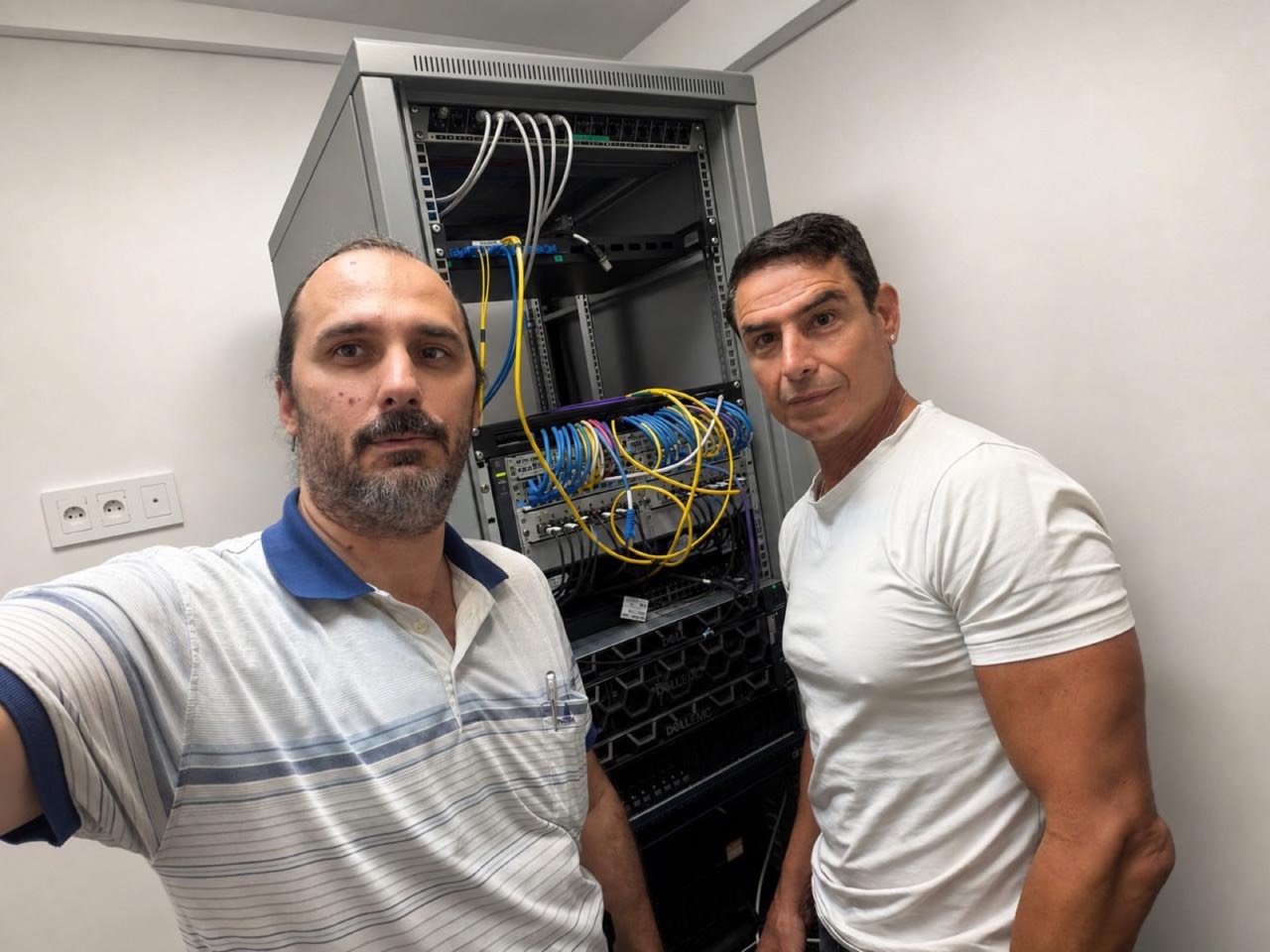
ILS engineer and Ariston Group client in front of the server and network rack for the project
Left: Vasili, ILS · Right: Nir Halperin, Chromagen / Ariston

CASE STUDY · ARISTON GROUP · CHROMAGEN

A controlled move to Proxmox, then the whole infrastructure

After Broadcom changed the licensing model, the cost of the VMware estate rose sharply. We took Chromagen of Ariston Group through a controlled, staged migration to Proxmox, with backup and DR, alongside a Sophos-based security stack that connects the branches over Sophos RED. We have managed their entire infrastructure since.

Virtualization
VMware → Proxmox, with DR and backup
Branches
10 sites under Sophos RED
Relationship
6 years of infrastructure management
  • Proxmox
  • VMware
  • Sophos
  • Sophos RED
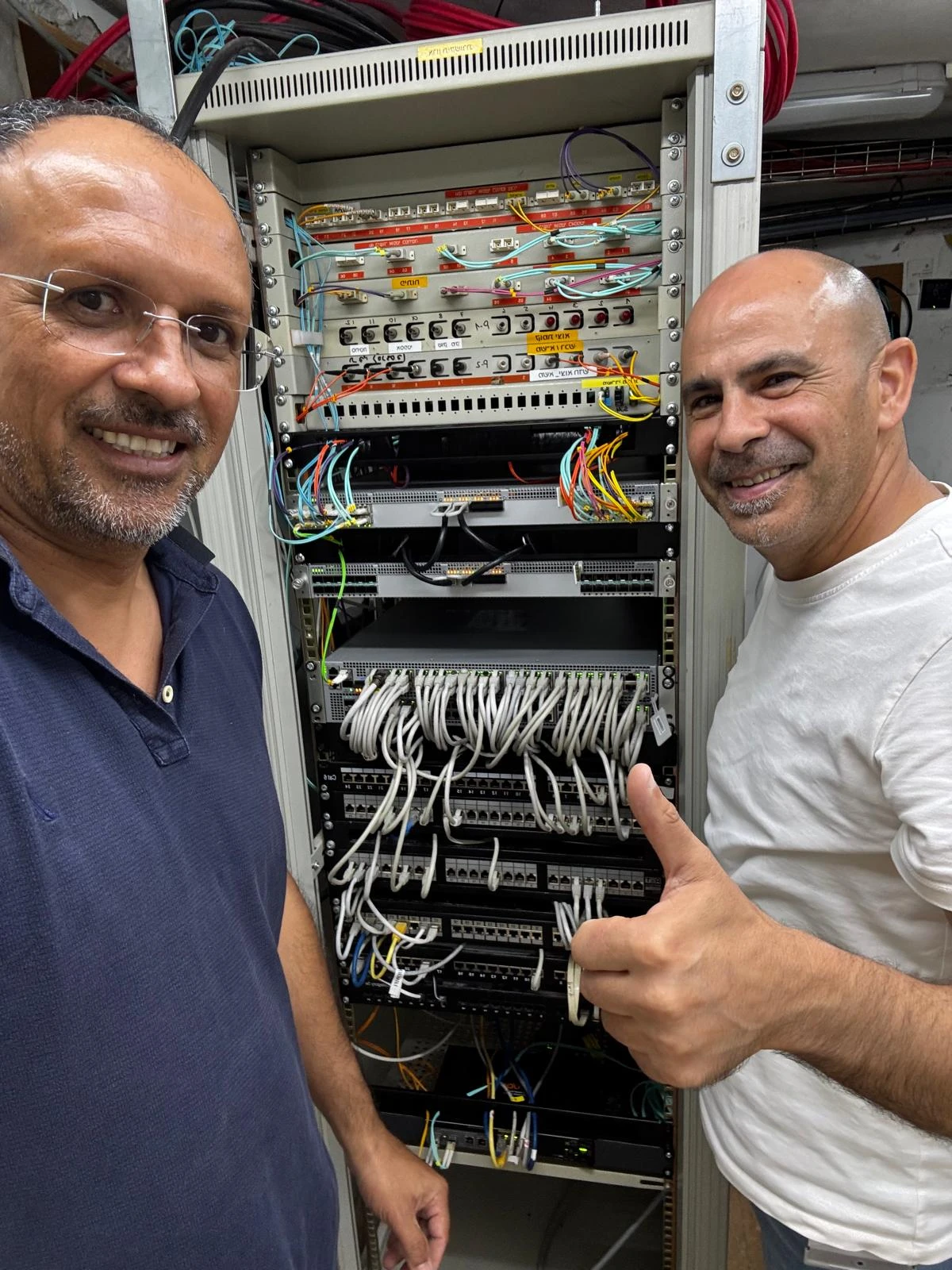
Eliran from Prigat and Alex from ILS at the network and server rack
Left: Eliran, IT Manager at Prigat · Right: Alex, ILS

CASE STUDY · PRIGAT · GAT FOODS

A test migration of the ERP first, then Proxmox server by server

Before the full move we ran a test migration of the ERP and logistics systems, with functional testing. Then we replaced VMware with Proxmox one server at a time, on the existing hardware, with backup and DR.

Pilot
Test migration of ERP and logistics
Cutover
Server by server, on existing hardware
Continuity
Backup and DR
  • Proxmox
  • VMware
  • ERP
  • DR

And many more clients we cannot name publicly.

Proxmox migration assessment

Four questions about your current environment, and we come back with a written assessment.

What are you running today?
How many virtual machines?
How many physical hosts?
What storage?

In line with our privacy notice. Prefer to talk? +972-54-454-6020

FAQ

Proxmox migration — frequently asked questions

Is Proxmox ready for enterprise production use?

Yes. Proxmox VE is a mature, open-source virtualization platform built on KVM and LXC, with enterprise capabilities built in: server clustering, high availability (HA), live migration, flexible storage management, and integrated backup. It runs in production at many organizations worldwide, and ILS Networks deploys and supports it in enterprise environments in Israel.

How much did VMware licensing prices rise after Broadcom?

It varies by organization. According to Info-Tech Research Group, renewal quotes typically rose 2x to 12x depending on the products in use (CIO Dive, November 2024), and European cloud providers told the European Commission of increases of up to 1,500% (Network World, 2025). Proxmox VE has no per-core licensing: the optional cost is a support subscription per physical CPU socket. The free initial consultation looks at what your environment actually uses.

Which VMware features does Proxmox have?

Most of what an enterprise VMware estate relies on exists in Proxmox VE: vMotion is Live Migration, vSphere HA maps to built-in High Availability, vSAN to Ceph (built-in distributed storage), vCenter to one management interface for the whole cluster, NSX to built-in SDN and firewall, and backup runs on Proxmox Backup Server or Veeam. There is also a built-in import wizard for VMs from ESXi. Anything not on that list is checked in the initial consultation.

How does a VMware to Proxmox migration work?

At ILS Networks, a VMware to Proxmox migration is a staged, four-phase process: assessment and mapping of the existing environment (VMs, storage, networking, backup, and dependencies), architecture design plus a pilot — a test migration with functional testing, critical systems included — a server-by-server cutover during coordinated maintenance windows, and finally acceptance testing, documentation, and backup and DR integration. Every phase has a rollback plan defined in advance.

Does the migration require downtime?

The amount of downtime depends on the specific environment and workloads. The ILS method is designed to minimize impact: workloads move in waves, each wave runs in a maintenance window agreed with the organization in advance, critical systems are scheduled separately, and every phase has a rollback plan. We do not promise "zero downtime" — we plan so that any downtime is defined, short, and predictable.

Does ILS Networks work with enterprises in Israel?

Yes. ILS Networks is an Israeli IT infrastructure company, serving organizations across Israel. Projects include a controlled VMware to Proxmox migration for Chromagen of Ariston Group, with backup, DR and ten branches under Sophos, and a Proxmox migration for Prigat (Gat Foods) that began with a test migration of its ERP and logistics systems.

How much Proxmox experience does ILS have?

The ILS Networks team has worked with Proxmox since 2015, and ILS is an official reseller partner of Proxmox Server Solutions. The team also works day to day with VMware and Hyper-V, as well as storage, networking, security, and backup infrastructure (including Veeam), so a migration is planned in the context of the whole environment, not as an isolated project.

Which workloads and hypervisors are covered?

Migrations cover Windows and Linux virtual machines — application servers, databases, Active Directory, file servers, and more — from VMware or Hyper-V sources to Proxmox VE. The process also covers the surrounding layers: NAS/SAN storage, networking and firewalls, the backup platform, and the required adjustments in the working environment. Complex or sensitive environments get individually tailored planning.

How does backup change when migrating from VMware to Proxmox?

In a VMware to Proxmox migration, the backup architecture is redesigned. On Proxmox you can use Proxmox Backup Server (PBS) — native, deduplicated, incremental, encrypted backups — or keep Veeam Backup & Replication, which officially supports Proxmox VE from v12.2. ILS defines the backup policy, connects it to the new environment, and validates recovery before the migration is complete.

How do replication and disaster recovery work on Proxmox?

Proxmox VE has built-in ZFS-based storage replication (zfs send/receive) between cluster nodes — asynchronous and scheduled — for local availability. For cross-site disaster recovery, PBS remote sync between backup servers and offsite copies are used. ILS designs the combination around the organization's RPO/RTO objectives.

Is Proxmox the same thing as Proxmox VE or PVE?

Yes — one platform, three names. Proxmox VE (Proxmox Virtual Environment, often shortened to PVE) is the open-source virtualization platform built on KVM and LXC. In Hebrew it is sometimes written phonetically as פרוקסמוקס.

Why are Israeli organizations evaluating a move off VMware now?

Mainly because of the change to VMware licensing after the Broadcom acquisition. Organizations reaching a renewal re-examine cost against the alternatives, and Proxmox is the alternative most often tested in production. We do not treat migration as the default answer: sometimes the conclusion is to stay on VMware, sometimes it is a staged move.

Also written: Proxmox VE · פרוקסמוקס · פרוקסמוקס VE · Proxmox · Proxmox Virtual Environment
A first consultation, on us

A short call with our specialists: what runs on VMware today, when your renewal is due, and what is right for you — move or stay. Free, no commitment.

Your details are used to respond to your inquiry, as described in our privacy notice.

Talk to us